
The right life jacket for your child is a life saver. But, how do you know what to get?
Here are a few of my favorite. First, two quick videos on why it’s so crucial – in ANY open water — AND then scroll down for US Coast Guard Guidance for how to ensure you have the right fit and vest for your child!
In Lakes.....
...and in the ocean.
Watch my INSTAGRAM video on how you cannot see people in ocean water.
What to Buy:
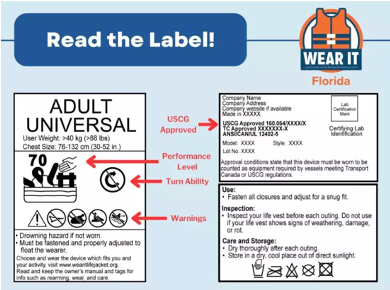
Look for vests that are specifically “US Coast Guard Approved”. How to know? check the label – it should have a USCG Approved number (image credit)
Shopping List:
- Infants:
- O’Brien Infant Nylon Type 2 CGA Life Jacket (0-30 lbs)
- Stohlquist Infant + Child Jacket (8-30 lbs) – NOTE – this is what my children all wore – but Stohlquist recently went out of business, FYI. I still love their stock, while it remains.
- Toddlers
- O’Brien Child Traditional CGA Life Jacket (33-55 lbs)
- Youth
- O’Brien Youth Traditional CGS Life Jacket (55-85 lbs)
- Stohlquist Escape Youth Lifejacket (50-90 lbs) (see note above about Stohlquist
- Other brands:
- Coleman USA, Oneill USA, Overton
- Good stores to purchase:
- REI, Dick’s Sporting Goods, and other major stores (so you can be sure you’re getting a legitimate product)
- To find a comprehensive list from the US Coast Guard, check here (type in keyword “infant” or “child”)
Plus, important guidance from the US Coast Guard:
The following is from the US Coast Guard site:
teach your child to use a pfd:
Children panic when they fall into the water suddenly. This causes them to move their arms and legs violently, making it hard to float safely in a PFD. A PFD will keep a child afloat, but may not keep a struggling child face-up. That’s why it’s so important to teach children how to put on a PFD and to help them get used to wearing one in the water.
ensure proper fit:
To work right, a PFD must fit snugly on a child. To check for a good fit, pick the child up by the shoulders of the PFD. If the PFD fits right, the child’s chin and ears will not slip through.
PFDs are not babysitters. Even though a child wears a PFD when on or near the water, an adult should always be there, too. Parents should remember that inflatable toys and rafts should not be used in place of PFDs.
test the pfd before going on open water:
Since infants and children come in many sizes and shapes, the U.S. Coast Guard and personal flotation device (PFD) manufacturers urge that PFDs be tested immediately after purchase. You should test your PFD in a swimming pool. Test it with the infant or child who will be wearing the PFD. Just because it works for one infant or child does not mean it will work for another in the same manner. Check for proper weight range, comfortable fit, and especially a stable face-up position in water. Infants and children are difficult to float in a face-up position because of the distribution of body weight and the tendency for them to struggle or attempt to climb out of the water. Some infants and children float best in one style of vest, while others will float better in another. If one does not work well, try another style.
All my best,
- Dr. Darria